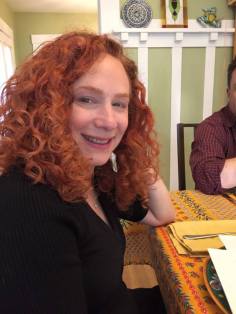
What She Looks Like: Jiyoun Chang, Scenic and Lighting Designer

Jiyoun Chang‘s ability to tell a story through light speaks to her gifts and sensitivity as an artist. As a mother, Jiyoun brings those same gifts and sensitivity to articulating the fear leading up to motherhood and the discovery of strength after the fact, as well as the hope she has for her daughter’s relationship to the work. As a woman in the technical field of scenic and lighting design, Jiyoun already works as a minority, and adding motherhood to the mix makes her situation all the more unique.

When Jiyoun begins to share “what we should know” about parenthood in the performing arts life, she dives into incredibly relatable, heart-rending advice from people that discouraged her at first, and then the advice that helped win her over. Her belief in the resolve and resilience of people who work in the performing arts is a tribute to the encouragement we can gather when we remember that – as a community – one of our greatest strengths is gathering in spite of uncertainty to “make it happen.”In her interview, she weaves beautiful connections between the discoveries of motherhood and the strength of storytellers in the performing arts. Visit her site to see her work with light and sets here: Jiyounchang.com/

unnamed-19
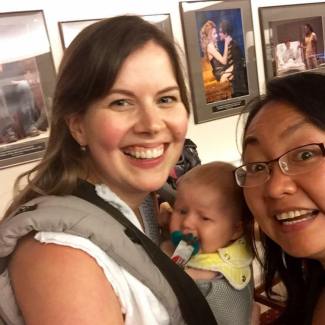
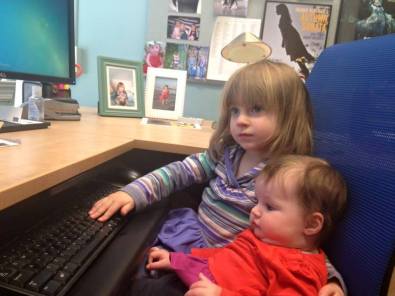
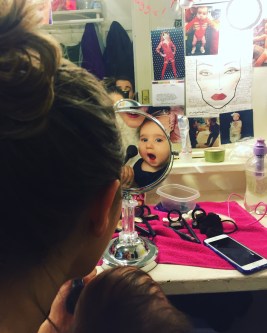
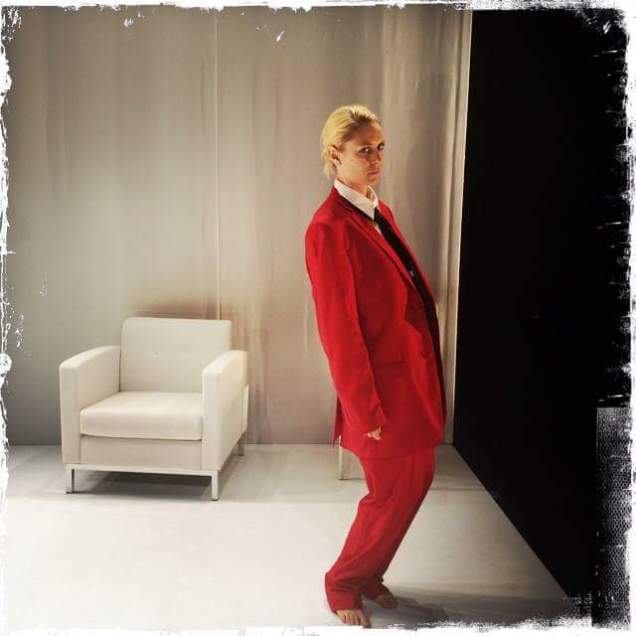
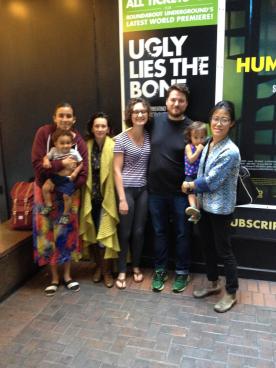
Far Right: Jiyoun Chang, Scenic and Lighting Designer, holding Eva (2.5 years old), at the theater with fans and friends.

Name: Jiyoun Chang

Profession: Scenic and Lighting Designer
Status 2.5 old Baby Girl

What surprised you about having a child and working your performing arts life?

First of all, it surprised me to learn about the evolution of a human being. Just every step of growing amazes me. I had never thought that would be something that I would experience through my child. I thought I knew everything about growing up, but I don’t, and it surprises me every little step she goes through with amusement – and scares me too with fear that I may ruin something so wonderful before its full realization. And that surprise in learning deepens my work. I am a better person with my child through the better understanding of how difficult it could be to learn how to lift up a head and crawl and walk. and that understanding goes further in the context of grown people and grown people in a story that I deal with my work.

What excited you about having a child and working your performing arts life?

My friends said to me that it shouldn’t be a problem for me to have a child because I never sleep anyway, but having a child is not like performing art that you work on and it lives a life for a while and ends one way or the other. Having a child is an ongoing project that never ends, and it’s exhausting, rewarding and tiring and joyful. Having to have work that has a limited life brings a different joy to my life now. It gives a balance to my life. I like going to work more than before and love coming back home more than before.

What challenged you about having a child and working your performing arts life:

I don’t want to miss every step of my child growing up. I like spending time in a theatre, and I do more precise notes and perfect what I do as much as I can, but I cannot be at both places and I will miss something somehow by what is clearly my choice. Making a choice is challenging – between my child and work. She has traveled to so many places and met with colorful people and experienced many things she couldn’t have if I had a different job, but at the same time, I am a person who goes away and does notes after hours and spends all day at tech, and she starts to express that she doesn’t like that sometimes, and it’s hard. My absence is more obvious than my husband’s, and it’s just the way it is with being a mother, and I can see that it can be harder later when she can fully express herself and articulate her feelings then I will be questioned what is more important.

What you look forward to about having a child and working your performing arts life:

I did a few shows in Korea, and my nephews came to see my show. I am very close to them, and I was always so sad I couldn’t spend much time with them. So it was very special when I could present work in Korea a few times and one of them was old enough to sit through my show for one act, the first half. My sister told him what I did for the show, and he observed the lights and asked a few questions during the show to my sister. The questions and comments he made were shockingly accurate to the contents and simply a wonderful response. I want that with my child. I want my girl to come see my show and tell me what and how she thinks of it. What she sees and hears and feels. I want her to criticize my work and make an argument about issues we deal with in the story. I can’t wait to hear her experience. It will make me feel so good that the time away from her is worth something.

What you think people should know about having a child and working your performing arts life:

Once I asked a very well-known lighting designer what it was like to have a family with a child while she was so busy working as a designer. She had a life I was anxious to have. I was in my early 30s, and I was simply nervous that I couldn’t have it. She said, “After I got my two Tonys, I was able to afford to have a nanny. I had a child with my partner and we got marries. When she came to this world, my emptiness was fulfilled.” I was devastated. I didn’t think I could every have a family or career or baby or anything. It will take a million years to have a Tony. I didn’t think it was possible at all. I was very depressed. I asked the same question to my mentor and he said, “You don’t plan these things. You don’t expect these things, and it just happens, and you deal with it.” He didn’t say anything further, but by the expression on his face, he was telling me it was not easy, but he dealt with it.

When I was so worried about the reality of having a baby and working at the same time, expecting a child in a few months, my friend told me, “You don’t know where your career is going whether you have a child or not. You don’t know it. So what does it make a difference if you have a child? You have a life full of unmarried, childless friends who can become aunties and your child’s life will be so rich.”

Once another friend asked me about having a child and working the performing arts life, and I couldn’t quite tell her what is best for her because it is true that it’s not easy to have a child and work. Period. Especially as a woman. Working in the performance arts has a different challenge all around with traveling and long hours and no weekend and no days off for two to three weeks to a month or more. But when it happens, you deal with it. When I was expecting my girl, I packed every thing in our house for moving in two days, and we closed our house in one month. We failed to get the first home we wanted, even my husband was skeptical about it working out, but then we moved to a new place somehow as planned and unpacked all in three days and hung curtains and cleaned up the house within a week with a feeling that our girl would come out few weeks earlier.

I really believe people working in the performing arts industry can do anything. We have to open a show tonight, and it will happen no matter what. We have to do a turn around overnight for tomorrow’s new show, and we will do it. Yes, maybe some need one broadway hit and two Tonys to have a child and have a family, but it’s all their choice of how to deal with having their family. When It happens to us, we will deal with it no matter what. We will bring the whole village of people to raise our children and make sure they are ok. And they will be ok with some mistakes and hiccups, with tears and laughs and sleeplessness and pain – and unbelievable joy. We work with limited resources and time and money under a huge stress, and it’s like going into labor with a different challenge, with pain that comes and goes away as if nothing happened, and just leaves pure joy.

Your favorite mommy-artist story:

Eva plays a lot of role playing. She pretends to be someone and assigns you a role to play as if she is a director. It happens fast. She plays different roles and gives you different roles to play very quickly and frequently (and it seems to be a good exercise for actors). Anyway, she sometimes plays the role of mama, Me. She would say, “I need to go do my notes,” which I say to her a lot at the end of dinner break or in the morning before tech.

My Favorite Quotes:

“I thought I knew everything about growing up, but I don’t, and it surprises me every little step she goes through with amusement – and scares me too with fear that I may ruin something so wonderful before its full realization. And that surprise in learning deepens my work.”

– Jiyoun Chang

“I really believe people working in the performing arts industry can do anything.”

– Jiyoun Chang

“We work with limited resources and time and money under a huge stress, and it’s like going into labor with a different challenge, with pain that comes and goes away as if nothing happened, and just leaves pure joy.”

– Jiyoun Chang


Jiyoun’s interview reads like poetry revealing the dance between reservation and resolve. Both light and shadow fill her piece to bring dimension and visibility to the working theater mom. I couldn’t be more grateful for her story.

More profiles coming soon!

If you are or you know a performing artist professional and mom who wants to share thoughts, answer these questions and shoot them to me at this contact form!


CHILDREN IN THE SPACE – A Collaborative Photo Essay on Working Parents in the Theatre

As mentioned in Part 2 of our Motherhood in the Theatre series titled “An Inconvenient Baby,” one of the many obstacles facing artist parents – mothers and fathers – who work in the theater is theater space that is off-limits to minors. Our goal with Part 3 coming up is to highlight and articulate healthy family-friendly initiatives practiced by theater communities around the country. As a pre-cursor to this final installment, a photo essay turned out to be the best way to highlight how children in the space can not only work, but work fluidly, showing the parents, children, and their theater community in action. The Interval published a photo essay recently on keeping “kids in the scene.” It is beautiful and extremely important (and what great exposure!), featuring mothers who work in the theater with their children, showing many mothers known in the theater out with their children or spending time at home, with one photo in the rehearsal space. Every contribution to increase visibility is a win for all of us. Our essay’s focus, however, is on children in the performance/work space and includes dads in as many photos as were submitted as such and was inspired by a conversation with Stage Manager and fellow theater mom Carmelita Becnel (her photos with twins below). It must be said that there should be no expectation of this sort of treatment across the board at all times for all persons from these theaters – the practice is still unregulated. Negotiations, permissions, and boundaries of space are still discussed on a case by case basis for every person and every theater. However, the point of this essay is that on-site child/parent work photo can be one of the most effective and positive tools for increasing visibility of the working-artist parent lifestyle within the theater and the theatre’s need to embrace that lifestyle more consistently across the board.

It may also be argued for the theater-at-large’s benefit that, as a result, youth may return to the theater as appreciators and patrons later on – in addition to becoming potential artistic contributors – because of the early, positive exposure they receive. The question of how to solve a dying audience may be right under our nose – in diapers – immersed in their parents’ creative work, watching the process unfold, and falling in love with the process thanks to welcoming theater communities around the country. In other words, embracing the artist parent lifestyle could very well lead to theatrical growth and audience revival. At the very least, it maintains the principles of acceptance, community, and expansion the theater claims are at its very core. Below, you see just a glimpse of what it looks like when artist parents are allowed to live in their expanded life and work life fluidly.

For entries with multiple photos, click any photo to enlarge and scroll through each artist’s slide show. Enjoy!


(Top Left and Middle) Papa Gregory Linington, Actor, and son Jonah on set for The Tempest, Directed by Ethan McSweeney, Shakespeare Theatre Company. (Top Right) Mama Shana Cooper, Director, and son Jonah, 15 months, exploring the projections on stage during dinner break of rehearsal. (Middle Left) Shana and Jonah, age 1, checking out the drums on break at rehearsal for The Unfortunates, ACT. (Middle Right) Shana and Jonah, age 1, in rehearsal for The Unfortunates, ACT. (Bottom Left) Shana and Jonah, age 1, on stage at dinner break for The Unfortunates, ACT. (Bottom Right) Little Foxes, Arena Stage. Photo by father Gregory Linington, Actor, of Jonah age 21 months.


(All Photos) Miriam Silverman, actor, and Stella age 3, The Goodman Theatre.

“Some of these were during student matinees, I brought Stella with me and an understudy watched her while I went onstage… she would watch me from the monitor. When I would be getting ready it was either screentime or laptime!”
– Miriam Silverman

(All Photos) Miriam Silverman, actor, and Stella age 3, Yale Repertory Theatre.


14786920_10154122996421902_1848730730_o

Kearston J Dillard-Scott, Lighting Designer and Daughter
Harrison Opera House, Norfolk VA

“Designing lights for a dance recital with my little girl!” – Kearston J Dillard-Scott


(Top Left) Matthew, 2.5, “calling his first show.” (Top Right) Kristy Matero, Stage Manager, and Matthew, 23 months, visiting “La Cenorentola” rehearsal. (Bottom) Matthew, 4 months old, with the Director and designers of “Appropriate” at Woolly Mammoth Theatre Co. in DC when tech fell on Halloween.


(Left) Daughter of Noreen Wilson Major, Chief Development Officer at Shakespeare Theatre Company in Washington DC, at a photo shoot for the theater. (Middle) Noreen and her daughter in the photo booth at the STC Free For All annual event. (Right) Daughter steps in last minute to perform in a reading of “The Wedding Band” for their ReDiscovery Series.

“Another child dropped out last minute and she fit the age/height requirement.” – Noreen Wilson Major


(Left) John Tufts, Actor, as Chico and son Henry as mini-Groucho Marx on stage at the Daedalus AIDS Benefit talent show, Oregon Shakespeare Festival (OSF). (Top Right) Christine Albright-Tufts, Actor, John Tufts, Actor, and their son Henry at rehearsal for OSF Daedalus AIDS Benefit talent show. (Bottom Right) Henry on stage with company during rehearsal for OSF Daedalus AIDS Benefit talent show.

Photo credits and link to the OSF event: “The next generation finds Center Stage. Daedalus Day begins bright and early as volunteers from all over the OSF Company and Community gather for a great cause…” Photo Credts: Jenny Graham

“This is the whole fam at an AIDS benefit at OSF.” – Christine Albright-Tufts


(Left) Baby Jo in mother’s studio, Elizabeth Barrett Groth, Designer. (Right) Baby Jo with grandmother at dress rehearsal for Allentown Shakespeare in the Park’s Hamlet, directed by Erik Pearson, performed in Daddona Park in Allentown PA. Jo attended all the fittings for the production with designer mom as well.


14191542_10102508732601618_1124014887_o

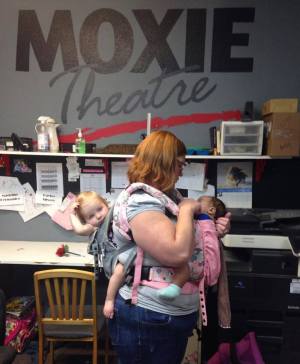
Sherrice Mojgani, Lighting Designer
Moxie Theatre, San Diego, CA 

“The little guy in front is mine!” – Sherrice Mojgani


14642100_1127273260641085_7260780872496670395_n

Daughter Ruby at the Julliard Costume Shop for mom Mattie Ulrich, Costume Designer for FLIGHT by Jonathan Dove. Directed by James Darrah and conducted by Stephen Osgood. Fitting a muslin mock up for a maternity dress.

“I think this hem needs some adjusting.” – Ruby


14591655_10154018875073595_2774930120207996330_n

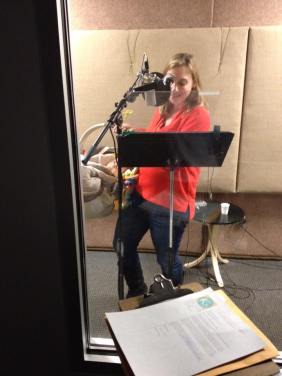
Cara Greene Epstein, Actor
Recording a voice-over while swinging her 6 month old son.


(Left) Katie Hartke, Actor, carrying 2 month old daughter in rehearsal for Much Ado About Nothing for Theater at Woodshill in upstate NY. (Right) Katie is joined by real-life husband Ryan Quinn, Actor, playing opposite her in the scene from the same production as his character proposes marriage.


(Left) Kate Marie, Director of Community Collaboration for Benchmark Theatre, with Charli Rose at a reading for a commissioned new play. Photo credit: Susannah McLeod. (Right) Working on a mailer for a local theater in Boulder, CO.


14705656_10157574131990247_8549827814211064996_n

Daughter of co-Authors Irene Carl Sankoff and David Hein embraces choreographer Kelly Devine during hours at Ford’s Theatre in Washington DC.

“[Kelly Devine is] one of the many people who help make the theater a second home for [our daughter].” – Irene Carl Sankoff


(Left) Daughter Vera to Jenna Woods, Stage Manager hanging out on a colleague’s desk at the Production Glue office. (Right) Vera attends an Equity meeting. Pictured at the meeting here with Jenna’s good friend, Diane DiVita, another stage manager.


14732406_10100257482659745_2356810040181947266_n

Erin Moeller, Company Manager for Manhattan Theatre Club, daughter Gwen “(looking overwhelmed!)”, and Winnie Lok,Stage Manager, at MTC’s Friedman Theatre.


14633047_10154247305072087_6213298871634897398_n

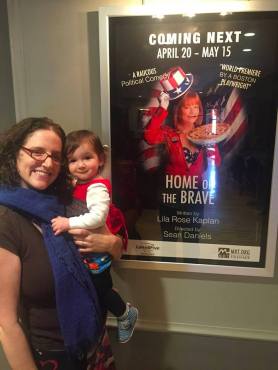
Lila Rose Kaplan, playwright, with 14 month old daughter Hailey Diana at tech for mom’s play Home of the Brave at Merrimack Repertory Theatre.


(Top Left) Lilly helps the run crew straighten the silk. Magic Rainforest at Lewis Center for the Arts, Princeton University. (Top Right) Mommy Carmelita Becnel, Stage Manager, and daughter Lilly check out the lights onstage. Magic Rainforest at Lewis Center for the Arts, Princeton University. (Middle Left) Freddy and Mommy Carmelita Becnel support tech. Zoyka’s Apartment. Lewis Center for the Arts, Berlind Theater. (Bottom Left) Twins Lilly and Freddy keep the chairs warm as Dad Jamie Cuthrell, Scenographer, builds in the Costume Shop. The Lawrenceville School. (Right) Freddy assisting with choreography rehearsal. Singing in the Rain. Lewis Center for the Arts, Princeton University.


14714877_10154846433295934_2464482739180874386_o

Shana Gozansky, director, with daughter.

“Visiting me in rehearsal when she was 8 mo!” – Shana Gozansky


14656337_10101357610309854_6163564219167480024_n

Amy Boratko, Literary Manager at Yale Repertory Theatre
Pictured: Daughters Rosalind and Beatrice hanging out at the Yale Repertory Theatre literary office.


(Top Left) Linda-Cristal Young, Staff Electrician, Yale Repertory Theatre. On-site, baby is “Trying to be like mommy!” (Top Right) “Learning the light board.” YRT. (Bottom) Making paper airplanes with old light plots.


14718867_10154059207943014_1940612921647391524_n

Nicole Bouclier Plummer, as Assistant Director at Long Wharf Theatre, captures a moment when her daughter rides her bike on a ghost-light stage.


As we said: just a glimpse of the incredible parents who work in the theater. There are some theater communities who have successfully created welcoming environments for artist parents, and we will highlight even more as well as articulate the importance of their initiatives and where they can go coming up in Part 3. Stay tuned. [Catch up with Part 1 & Part 2 of the series on motherhood/parenthood in the theater here.]

Don’t forget to check out our interviews with some on-site mamas HERE in the series “What She Looks Like,” featuring working artists and their thoughts on the challenges and joys of colliding lives. Click on the gallery to get started!


THANK YOU to all the artists who submitted! If you would like to submit your own photo(s) as a theater-parent with kid on-site, email to AuditioningMom@gmail.com and include your name, occupation, location, and project + photo credit if applicable.

What She Looks Like: Blair Goldberg, Actor/Singer/Dancer

In preparation for the next piece on motherhood in the theater, here is a beautiful interview from Broadway actress Blair Goldberg. From pumping in her dressing room to overcoming PCOS (Polycystic Ovarian Syndrome), she’s no stranger to the dynamics and demands of motherhood and theater colliding. As I collect testimonies of mothers who have been supported by their communities, I’m more encouraged than ever. Reading Blair’s story of a dream fulfilled and harmony found – both as an actress and a mother – provides a wonderful guiding light for the argument we are crafting in making a path available for motherhood in the theater arts.

Auditioning Mom and Blair are working to make working moms visible. There is so much community to be found. Working theater moms exist at every point in the spectrum, and here Blair shares a bit of the hard work and magic we all fight for. She’s working it at Kinky Boots on Broadway and loving the miracle in her home. To check out more, you can follow her at http://www.Blair-Goldberg.com.


qlbop-z9
Blair Goldberg, Actress – KINKY BOOTS on BROADWAY

Name: Blair Goldberg

Profession: Actress/Singer/Dancer currently in KINKY BOOTS on Broadway

Status: Lyla, 1 year old.

What surprises you about having a child and working your performing arts life:

What surprised me the most was just how strong I am capable of being on a day to day basis. Becoming a mother leaves very little time for self-care, and you’re constantly in a state of being in over your head, with a million things to get done. I never could’ve imagined how much stamina I really had, deep down, to be a full time mom and a full time Broadway actress. Before I had Lyla, I was perfectly content to sit around all day and relax before my show at night. Sure, I would run errands and go to the gym (occassionally, ha!), but there was always time to relax and make sure I was fully resting my body for my job. Of course, this just isn’t possible as a mother, and I was really proud of myself for the fact that I openly accepted this challenge and still maintained some sense of sanity. I had always accepted that I would just be in a constant state of exhaustion as a mom, but it really did surprise me just how much my body and mind are capable of. As the mom of a baby who refused to latch, breastfeeding was also terribly exhausting and difficult- I ended up exclusively pumping breastmilk for her, which was double the time and double the work- but it was so worth it. Somehow, I always found the time. That’s what we moms do; we make it work! It’s a new way of life for me! I rarely make excuses for things that I used to in the past, especially in my performing arts life because being a mother, we just get the job done!

What excites you about having a child and working your performing arts life:

I was and am so excited to share my world with her. I love that I can expose her to the beauty of live theater and all of the gorgeous souls that are a part of it. I got pregnant while on the tour of Kinky Boots, and having that little baby in my belly while I performed a show every night, that preaches tolerance and love, was such a gift. I went back to Kinky Boots (this time on Broadway) when my daughter was 3 months old. I love that the show is such a prevalent part of my journey into motherhood. The first time I took her to the theater and stood with her on the Broadway stage is a moment I’ll never forget.

 –

What challenges you about having a child and working your performing arts life:

Motherhood is by far the toughest (but also most rewarding)  job in the world, so, where to begin? Pumping milk between scenes, backstage, was so difficult and draining (literally)! I look back and seriously have no idea how I did it. Giving the amount of energy required for my job every night on very little sleep at first was a huge reality check. But luckily, my baby became a great sleeper pretty early on, and I quickly got in to the groove of juggling career and motherhood. My wonderful husband was, and is, so hands on and helpful, and we worked asimg_4156-1 a team to make sure both of us got the amount of rest we needed to do our jobs well (he’s a high school choir director). It is still a challenge to get enough sleep-I get home from work anywhere between 10-1130 pm depending on what night of the week it is, and it’s hard to quickly unwind and force yourself to sleep after a performance. The baby wakes up between 6-7am, so it’s always a race to catch some zzzz’s-I’m sure all of my fellow mamas can relate! Also, my husband and I play tag team- he gets home around 4pm and I leave for the theater around 6-635pm, depending on the day, so we make it a priority to use my nights off as date nights-it is so important to us and we love that time together.  Lastly, another challenge is the sheer fact that as a mom, I’m using my voice all day to talk and play with Lyla, so it’s difficult to truly ever be on vocal rest for work. Now that I’m 8 months into my run on Broadway, I need less rest between shows, but it’s certainly difficult to navigate when I’m not feeling my best. My technique is, as a result, better than ever.

What you look forward to about having a child and working your performing arts life:

I can’t wait to take my daughter to her first Broadway show. And, of course, I can’t wait for her to see me on stage for the first time. She’s still young, so she has some time, but I think about how cool that moment will be, very often! I hope I make her proud.

What you think people should know about having a child and working your performing arts life:

That it can work. If being a mother is something that you’ve always wanted (which I did) then you CAN have both. I dreamed my whole life of being on Broadway and worked my butt off to get where I am today. But I also took my personal life veimg_5495ry seriously and made it a huge priority. There is never a right time to have a baby. In my case, I was diagnosed with PCOS (Polycystic Ovarian Syndrome) in my early 20’s and was told it would likely be difficult for me to conceive. So I always knew that it might not happen for us or that it might be a long and possibly expensive road to have a family. When we decided we were ready to start our family, we were blessed with a healthy pregnancy rather quickly, despite my diagnosis. Of course, I immediately thought about my career. At 26 years old, I had an amazing, once in a lifetime job that I was going to have to compromise. However, life has a way of working itself out if you allow it to. Though I was cerebrally concerned about the future of my career, something in my heart told me that everything was going to be okay. I felt a sense of calm during my pregnancy. During my maternity leave from the tour, the same role opened up on Broadway, and I was transferred to the NYC company. You have to take a leap of faith and trust your gut that everything else will fall into place. If you live your life in fear, tunnel visioned on your career only, you’ll miss out on all of the other beautiful things life has to offer. I believe having a child has made me a better actress in ways I could never begin to explain. My heart is literally on the outside of my body now that I have Lyla, and I am grateful to be able to use that feeling in my work going forward.

img_3934
Blair and Lyla sharing the light.

My Favorite Quotes from this beautiful piece:

“The first time I took her to the theater and stood with her on the Broadway stage is a moment I’ll never forget.”

– Blair Goldberg

“My technique is, as a result, better than ever.”

– Blair Goldberg

“If you live your life in fear, tunnel visioned on your career only, you’ll miss out on all of the other beautiful things life has to offer.”

– Blair Goldberg

“My heart is literally on the outside of my body now that I have Lyla, and I am grateful to be able to use that feeling in my work going forward.”

– Blair Goldberg


Stay tuned for more theater initiatives and moms taking action in the next post of our series. And share your light with your baby and bring your baby into the light. You deserve to be seen, mama.

More profiles coming soon!

If you are or you know a performing artist professional and mom who wants to share thoughts, answer these questions and shoot them to me at this contact form!

What She Looks Like: Stephanie Hayes, Actor/Theatre Artist

I had front row seats to Stephanie’s performances as a colleague in grad school. They were raw, brave, and unapologetically honest. Stephanie characteristically brings these same qualities to articulating the relationship of mother and actor/theatre artist in this moving interview. Much of what she encounters is echoed in an earlier post by other mothers who also encountered the obstacles mothers face when creating at a professional level. Stephanie’s personal testimony generously offers a transparency to the inner thoughts and outer struggles of a woman who has the audacity to expand herself. She also highlights the importance and validity of mothers wanting time after birth to bond and regather, embracing a distance from the hustle of the business. This time of human connection and reflection can be enormously beneficial for personhood and art – the profession we pursue should respect and validate this time, allowing for an artist to feel no apology in taking it.

At the time she submitted this interview, she had questions about her theatrical involvement. While she remains open to that evolution, she now has a production in the works with Elevator Repair Service in Washington, DC called The Select. You should also watch for her translation and adaptation of Strindberg’s The Creditors currently in the works. I have a feeling this is just the beginning of what we hear from the devoted mother and artist Stephanie Hayes. Read below for her insights on the magic her daughter brings to the work and some changes we need in order for better work to be made. Enjoy!


Stephanie Hayes, Actor/Theatre Artist

Name: Stephanie Hayes

Profession: Actor/Theatre Artist

Status: Mother to Zada – a 14-month old red-head

What surprised you about having a child and working your performing arts life?
Having a baby cracked my life open in the most intense way imaginable. It put in to question my whole identity as woman, artist and human being. It has made everything more. More joy, more fear, more confidence, more uncertainty. More more more. The biological urge to make a baby descended on me quite suddenly and I had always said that I would only do it if my body asked for it. And it did. That’s how the Gods trick you in to it; they make the urge stronger than your ability to think through how it’s all going to work. I felt very hopeful during my pregnancy, cocky even. I felt invincible. I took it on the way I would an acting role: I researched, meditated, exercised and got myself a coach: a doula. My pregnancy was rather audition-less; I don’t think people know what to do with pregnant actors. I mean, I understand that longer theater commitments are tricky, but guest roles on TV should be possible, no? In any case, I took an office job so I could save money for my “maternity leave”. I was glad for the brief financial stability. I worked up until the moment I went in to labor and birthed my daughter in a pool at home in Brooklyn. It was a most animal event, the birth. I can’t believe they haven’t written more about birth in the history books; it’s enormity is comparable to a revolution. The inevitability, the pain, the loss of time and place. I was a nurturing warrior and the first few months of motherhood were wonderful for me. I surrounded myself with mothers, aunties and wise women who knew what I would need to keep PPD at bay. My spouse was a champ. He took my job so that we could keep the income in the family while I was mothering. All was tough, good and new.

However, when the time came to burst out of the blissful mothering cocoon I’d been in, I was shocked to find that I had no desire to perform. No desire to audition, to get a job or even be creative. It made me question who I was as an artist and also as a mother. What’s left of me now if all the things I thought I loved so much are not appealing anymore? What kind of example would I be to my daughter if I didn’t know my passions? There is a reason some countries give you a year’s maternity leave – so you can foster a healthy bond with your child which in turn will create healthy citizens, but also so that you can take the time you need to return to yourself after the outer-space odyssey that is birth. It takes time. It’s been a long process to find the desire to throw myself back in the game, and I still don’t know that theater is where I should be. When you are being observed everyday, witnessed by the most adoring audience member, it’s hard to find the need to get on the stage. My creative impulses are now more in the vein of writing, making theater and teaching. I know that not all acting mothers feel this way – I certainly didn’t think I would. That’s the scary thing about birth, you don’t know who you’ll be the other side of it.

What excites you about having a child and working your performing arts life?
I know I’m a better actor now. I know I’m more daring, more courageous and less worried about what other people think. I am less concerned with my appearance or aging. I birthed a human being out of my body. I nourished that being with my breasts. I walked through the dessert to bring her here and even though I am less my former self, I am more human, more physically connected to that indescribable and universal thing that some people call God. As someone who makes my own work, I am excited about bringing my daughter to rehearsals, exposing her to the magic of theater making and I dream of putting her in my shows. I hope the theater will be one of the places where she learns about humanity and compassion. But you won’t find me hoping that she becomes an actor. I won’t stop her, but I would never encourage it.

What challenges you about motherhood and your performing artist life?
As someone who comes from Sweden, where you get 1.5 years paid maternity leave, I struggle with the lack of support that mothers get in this country. It’s brutal. And it’s particularly hard for performing mothers. I was just offered a wonderful opportunity to work with a director I admire. He was very supportive of my “situation” and arranged appropriate accommodations and childcare, but then we found out that the theater itself does not allow artists to bring their children. So, I was not able to take the job. On the other hand, when Zada was 4 months, I shot an indie-film and the director made sure to pay for on-site child care and I nursed her between takes. So, of course there are people out there who get it, but it’s scary that there is no system in place, that I just have to pray and hope that the people I want to work with are going to accommodate me. I hate having to feel bad about mentioning that I have a baby, worried that it will be a deal breaker. I should not have to feel shame about being a mother, when it is a point of great pride and honor. I feel in my soul that becoming a mother has made me more focused and a better artist, and yet I feel like I’m being punished for having had the audacity to give birth. People should WANT to work with mothers. They have done something brave and magnificent. They are forced to be heroines on a daily basis – we should want them in our rehearsal rooms. And we should do what we can to accommodate them.

What you think people should know: 
Baby sitters in New York make more money than actors, unless you’re on TV or Broadway. I’ve had to say no to a number of jobs because I can’t afford to take them. As long as you are breastfeeding, the baby is dependent on your body, so inevitably it’s harder to leave town, travel or stay away for long hours. I’m not auditioning at the moment. I’m taking a course in creative writing and slowly building my own show. So, yes – my “career” has perhaps taken a bit of a beating. But as many parents would say, I would change nothing. It’s such a bizarre paradox, because yes everything gets harder, tighter, busier – but I would do it all over again if it meant I could have that same little redhead in my life. I mean come on, she’s the best clown I’ve ever met and she makes me stop and look at birds and squirrels.

Production Photo: Stephanie Hayes in Illusions at the Baryshnikov Art Center

Some Absolute Favorite Quotes:

“That’s the scary thing about birth, you don’t know who you’ll be on the other side of it.”

– Stephanie Hayes, Actor/Theatre Artist


“Of course there are people out there who get it, but it’s scary that there is no system in place, that I just have to pray and hope that the people I want to work with are going to accommodate me. I hate having to feel bad about mentioning that I have a baby, worried that it will be a deal breaker. I should not have to feel shame about being a mother, when it is a point of great pride and honor.”

– Stephanie Hayes, Actor/Theatre Artist


“I feel in my soul that becoming a mother has made me more focused and a better artist, and yet I feel like I’m being punished for having had the audacity to give birth.”

– Stephanie Hayes, Actor/Theatre Artist


“I can’t believe they haven’t written more about birth in the history books; it’s enormity is comparable to a revolution.”

– Stephanie Hayes, Actor/Theatre Artist


Honesty and expansion are two great qualities of an artist. When the business creates obstacles against these qualities, there is a problem with the structure of the business – not the artist. I hope you all feel empowered to take the time you need and create the work you love. In the meantime, we’ll continue writing so that the business makes room for the art and not the other way around. Go get ’em.

More profiles coming soon!

If you are or you know a performing artist professional and mom who wants to share thoughts, answer these questions and shoot them to me at this contact form!

An Inconvenient Baby: Motherhood Disrupts the Theatre Environment

do-not-enter-theater

And Other Myths and Obstacles Mothers Encounter When Attempting to Create at a Professional Level

YOU ARE READING PART 2 OF MOTHERHOOD IN THE THEATRE ARTS
[Read on the Obstacle of Childcare in Part 1]
[Read on Solutions for Parents in Part 3 and Part 4]

As a member of the theater arts, I take pride in the craft’s claim to explore discriminatory social myths and strip them down, both by inclusivity in practice and revelation on stage. Yet the theater through bad practice has created its own collection of disenfranchised groups. One of the most recent groups seeking adjustment to exclusionary theater practices is theater practitioners with children, particularly the theater artist/mother. By disenfranchising this diverse group of willing collaborators, the theater dangerously cuts itself off from some of its greatest artists. Preserving the theater’s identity and rich reserves of artists depends on generating awareness of bad theater practice that leads to exclusion. If the theater does not create solutions to bad practice, it will devolve into a dimensionless, commercial space at a loss for life and creativity – and its patrons will fade with it. This article identifies some of the discriminatory restrictions created by the theater that prevent some of its greatest artists from working at highest capacity. (Living wage and childcare expenses, the major inhibiting factor, were covered in Part 1.)

Pre-Emptive Discrimination:
Deciding For a Mother in the Theater When She Is Ready to Work – or Not

I recorded earlier my own encounter with being discounted for consideration by someone behind the table because they doubted my readiness – even though I was certain of it. Essentially, before considering a woman for a role or position, a hiring entity will discount or scratch her off the list of possible contributors citing the reason “she just had a baby” or “she has a kid(s).” One mother/theater artist called it, “being left off the list.” This exclusionary perspective results in dire personal, social, and professional consequences. First, discrediting a mother without her consideration removes that mother’s autonomous agency in her own professional and artistic decision making. Second, it then immediately and arbitrarily reduces her professional status and relevance among her colleagues. Third, not only can no other person assess accurately a mother/artist’s readiness but herself, but also a hiring body’s exclusionary behavior potentially results in an artist’s loss of work. Hiring entities cannot declare themselves the authority of a mother’s body, mind, and artistic capacity because the timing of readiness is unique to each individual artist. Theater companies should work consciously to abolish thought, language, and action that decides a mother’s readiness without the mother herself as the primary reference point. Only the mother knows when she is ready to work again, what she’s capable of contributing professionally, and at what point in her career. Be thoughtful. Listen to your meetings. Ask “have we considered her?” and then DO. An artist’s right to say no is as precious as his or her right to say yes, and mother-artists deserve that right.

Judge a mother who is an artist on her work, determine she fits the vision based on professional contribution, but do not tell her whether or not she is ready. Elimination from consideration based on procreation is discrimination.


Exclusion from the Theater Space:
Making All Living Arrangements and Rehearsal Property Off-Limits to Minors

An award-winning playwright with her masters from a prestigious university wrote about an arbitrary restriction placed on housing during a playwriting appointment with a Manhattan theater: absolutely no individuals under the age of 12 allowed in housing. Upon receiving this news, the playwright’s agent responded that the writer had just given birth and was a breastfeeding mother, so the theater would have to adjust that rule immediately. Instead of a positive response, the theater reacted with resistance and created a long and arduous negotiation process – all because their housing was strangely off-limits for occupying by anyone under 12. This rule and negative response came as a surprise to the playwright. She had recently finished a workshop with a large theater in California that allowed her parents to bring her newborn not only into housing but into the rehearsal room itself every couple of hours to nurse. The environment hadn’t been disrupted in the slightest. Rather, it had generated incredibly successful work. In spite of this collaborative experience, once the negotiations heated up in New York due to the theater’s resistance, so did the playwright’s resolve weaken on whether or not this was an opportunity she could take.

Another artist wrote in that she had been offered a job by a director she admired. The director was extremely supportive of her work and even made childcare arrangements for her. Once everything was in place, however, they learned that the theater does not allow artists to bring their children. The actor was unable to take the job.

These artists were stranded by an arbitrary ultimatum demanded by theaters who refused to accommodate – not due to the difficulty of parenting or the artist lifestyle, but due to the theaters own limitation and unwillingness to adjust. Too often mothers who have already put in the incredible logistical work and resigned to financial sacrifice will be denied by a company that has not put in its own work to make adjusting to family-conscious employment possible. The parent will then begin to bear the weight of responsibility for the impossibility of work, which can lead to distancing and even resignation away from the craft and profession. In the case where theater companies create arbitrary restrictions on living and professional space, they are creating discriminatory obstacles against the survival of the theater artist/mother. In other words, in spite of the perpetuated myth saying otherwise:

A mother and her family are not the obstacle – the artists refusing to collaborate with them are.


Inaccessible Schedules and Disregard of Set Time Boundaries:
Family-Exclusionary Events on the Social and Professional Level

Many theater artists/mothers brought up the problem of scheduling, first in terms of not respecting rehearsal cut-off time. When a design meeting or rehearsal or production notes are scheduled to end at 5:30PM, often the conversation will carry over, and those who stay are seen as dedicated, creative, and most likely will be better connected about the process the following day. However, many parents who stay for a partial time or have to leave on time may be seen as absent, behind on work, and may even feel they themselves are out of synch with their collaborative team by the very next day. A parent responsible for taking care of children at the end of the day is then forced either to care for their children or to stay and prove their dedication and make sure they don’t miss out on important discussions that should be had within scheduled time. This topic has become relevant enough for ivy league universities to begin addressing exclusionary practices in their own scheduling and expectations.

As one mother wrote: “Called until 5 on a gig yesterday. Everyone else decided loosely to stay and look at a couple of things until 5:30. I stick around until the last possible second that I can, but I miss the final chat of the day because I simply cannot stay past 5:20. Because, babysitter. And I had planned for 10-15 minutes of chat after the call ended, but no more. And I’m a stage manager, so missing final chat feels really, really irresponsible. And now I’m worried about how this comes off. UGH. The constant, you’re called at x to end at y but x means 30 minutes early and y means an hour later makes me nuts. Just call it what it is. Oh and if you ask, ‘Will it be useful to stay a little later?’ ‘No no no! You’ll be out at 5. 5:05 at the latest.'” The response to this submission was a collection of multiple, resounding “Yes!”s from numerous theater artist/mothers. Theater companies and practitioners must remedy this detrimental lack of awareness in the room of disrespecting scheduling boundaries.

In addition, all theater artists know that the social arena provides invaluable soft networking and – at times – conversation that moves work forward the next day. For parents coordinating their schedules according to the needs of both their family and professional team, being unable to attend extra-curricular conversation can inhibit the parents’ collaboration and social status in terms of professional expansion. One artist wrote, “There was a night during my first year of parenthood when I rushed home because our nanny had to leave, and I sat in my kitchen with a screaming baby scrolling through Facebook and saw the director and all the collaborators for my next show as dramaturge (including my partner and kid’s dad) posting from a bar all the concept work they were drawing up on cocktail napkins. The production meeting the next day became useless for them, and I never caught up with the rest of them to be a full collaborator on that show.” For artists with families, making the reality of late-night, post-rehearsal drinks becomes impossible. Most socializing for theater practitioners begins at 11:00 PM, a hard line to cross for a parent who needs to relieve a sitter or simply get in a few hours before their life’s responsibilities start in the early hours next morning. Once again, the willingness of a team to move on without one of their members comes from a disregard of boundaries and lifestyle. The parent-artist who bears the consequences of this exclusion also feels pressure to bear responsibility for it – either self-induced or from inconsiderate collaborators. When the artist-parent puts in the time, effort, and respect toward the schedule of the meeting, the meeting, in turn, should respect the schedule of the artist.

Collaborators must become aware of their fellow theater artists’ boundaries and creatively problem solve to find the inclusivity guaranteed to improve a cohesive work environment.


Solutions and Possibilities
In Part 3 coming up, I list theater companies and family-conscious theatre practices that revolutionized the theaters’ ability to collaborate with family artists and the family artists’ ability to create. In other words, companies who prove that the accommodation of theater artist/mothers and parents is possible. The issues presented here in Part 2 of pre-emptive discrimination, exclusion of families from the theater space, and inaccessible social and professional scheduling can be solved by generating an awareness of bad practice. It starts with consciousness. As the provost of Brown University puts it, “Family-friendly scheduling…means that those engaged in programming should be conscious of the exclusions created by after-hours events and should take proactive steps…” As for pro-active steps, the theater environment as a whole will improve when it shows a willingness to collaborate in a way that creates pathways for all artists in the room. One theater manager identified this willingness to collaborate as “creating a culture of ‘yes.'” In the theater arts, a craft that prides itself on progressive and inclusive practice, ignorant and discriminatory practices such as the ones mentioned above are unacceptable and at the root of many of theater’s blind spots that keep its practitioners forced onto the fringe. So who are these companies successfully accommodating artist families and what are they doing to accomplish it?

More on heroic allies, healthy approaches, and supportive companies in part 4.

Want to learn more about how we’re working to change things for parents across the country? Connect with
Parent Artist Advocacy League for the Performing Arts (PAAL)
here in the US.

17632228_144273259433496_459244856475593807_o (1)


What She Looks Like: Makenzie Hernandez, Actor

When I first met Makenzie, she was 9 years old playing Bet to my Nancy in Oliver! She had unreal talent and all the presence in the world even then, but life called her other places. I pursued acting heavily, and her life took her and her family on different routes all over the world. She has since done something arguably harder than continuing work in the arts as a mother – re-starting work in the arts as a mother. We remained close friends since our first show about two decades ago. She was even one of the bridesmaids at my wedding, and one day – not too long ago – in the midst of texting me pictures of her two beautiful daughters, she made a confession: she was diving back in. She had always loved acting, missed it more than ever, and wanted all the info available for breaking into the world she once called home. For many, pursuing a professional acting career is challenging enough when starting from scratch. Starting from scratch and breastfeeding is another beast all together.

The heartbeat of my passion is seeing and hearing moms empowered to do everything they want with the art they possess. Whether that means keeping it small or blowing the lid off. In a very short time, Makenzie fought the fatigue and doubt and worked her way to getting representation, multiple auditions, and booked her first short film – and she’s just getting started. She’s doing it. Her words of wisdom and empowerment as a working actress and young mom with two diapered babes are going to be part of my mantra as I keep moving forward as well.

Enjoy, mamas.


img_9201
Makenzie Hernandez, Actor+Mom.

Name: Makenzie Hernandez 
Profession: Actor 
Status: 2 children ages 1 & 2

What surprised you about having a child and working your performing arts life:

When I decided that I wanted to begin my career as an actor I was a stay at home mom of a baby and a toddler. My family was on a somewhat consistent routine and my daughters and I spent all of our days together. I was nursing my youngest through the night and we were definitely used to a busy but predictable schedule. I knew that adding in “actor life” to the mix of “mommy life” was going to bring about definite changes; I just didn’t know what they would be. Honestly I think I underestimated what it takes to do both jobs with 100% effort and still I was nervous for how my husband and babes would adjust to this “new thing” that was making a grand, full-force, and quick entrance into our lives. Not only was I anxious for how they would adjust, but I was also wondering how on earth I thought I was going to be able to take another huge job on my plate. The life of a mom is about 20 hours a day, 7 days a week (if not more). Even though I knew that I was making the right jump by giving a career in this industry a try, I still found myself asking multiple times a day (mostly in the middle of a grocery store when whatever I just put in the cart was promptly thrown out by my toddler while my baby hysterically cried and pulled at my shirt for a nurse-on-the-go), if I was completely out of my mind for thinking I could do both. All that aside, I was determined in my heart to make it work without sacrificing home life or excellence in my craft. It’s a big dream and it’s an even larger work load to make it a reality, but as the auditions started to come in and especially once I started to get work I was blown away at how well everyone adjusted to these new time demands. I am learning that, yes, kids love routine, but they also have the immense ability to be flexible if you just do a little preparation. I also learned that I don’t feel any more drained emotionally despite the pressures and time constraints that I face now. Actually, I feel more energized than ever. This energy that is put into something I am so passionate about is providing such a creative outlet for me and as I grow in this area I am growing in others as well. I have joy in the relaxed moments and patience in the mundane moments like never before that equips me for the energy and focus I need for the fast-paced life I live outside of my home. It’s been so cool to see how things work out when you have personal passion, determination, and mega familial support. Anything is possible it seems.

What excited you about having a child and working your performing arts life:

 The thing that excited me and that I still love most about being an actor-mom is the example I get to set for my girls. I want them to grow up seeing that it is completely okay to go against the grain, be the odd one out, fit in, not fit in, be a stay at home mom, be a working mom, cook gourmet meals every night, or just not starve. There are so many pressures on women to be a certain type of person who is a master at a certain type of skills and doesn’t let anything come between her and the clean toilet at the end of the night. I desperately want my daughters to grow up feeling the freedom to pay absolutely no attention to those pressures whatsoever. It is a struggle for me to live a guilt-free life as a working mom, and it is something I want to fight against daily so that we can one day have a generation of Mommas free from the guilt of exploring their time-demanding passions. I want them to know that it is not only okay for them to be who they are, but that it is necessary for a fulfilling life. I want to make sure that I empower them, not only verbally, but also by example. 

What challenged you about having a child and working your performing arts life:

 There are plenty of challenges that come with this life but I think the majority of the challenges I face are totally self-inflicted. As I stated above, there is a guilt I face that I am not doing enough as a mom or not measuring up. There are expectations I put on myself that my schedule just doesn’t allow for me to meet. Those expectations are baseline for some moms I know and for me, at this point in my life, they are just unrealistic. Coming to terms and being at peace with that is still a challenge that I am working on. There is also the reality of less time spent with my kids than what I was used to before. Missing them when I travel or when I am not home for dinner and bedtime is rough, but it has encouraged me to make sure that the time we spend is quality and that makes all the difference.  

What you look forward to about having a child and working your performing arts life:

 I am excited to see where this journey takes our family. I am totally the kind of personality who wants to know every detail of every moment in order to prepare perfectly for whatever is to come. Being a mom and being an actor both go against all of those tendencies. Everything seems to be improvised and spontaneous. It is going to be a glorious life-long lesson in how to be flexible and available; how to let go of worry and hold on to trust. I think these are invaluable lessons and I am thankful that my life is providing so many opportunities to learn them. I love that the things I love most are challenging me and stretching me every day. It is making me strong in weaker areas and showing me new strengths I might have never known otherwise.

What you think people should know about having a child and working your performing arts life:

To every parent who has put performing arts life in a closet, on a shelf, or even buried it deep in the backyard of another person in a country far away due to fear like I had, I encourage you to go pick it up off that shelf, or out of that deep hole. Dust if off and welcome it back into your life, with all of the love, and conviction you once had, and with an open heart. Fear is not the voice you listen to. It wont be easy, surely. Most things worth your life aren’t easy. But it will be a labor of love that is full of life and joy, and it is most definitely worth it. You are worth it. In the end, your babes will thank you for choosing to thrive in this life so that they could know firsthand that it is possible to do much much more than just survive.


My Favorite Quotes:

“The thing that excited me and that I still love most about being an actor-mom is the example I get to set for my girls…I want to make sure that I empower them, not only verbally, but also by example.”

– Makenzie Hernandez

“To every parent who has put performing arts life in a closet, on a shelf, or even buried it deep in the backyard of another person in a country far away due to fear like I had, I encourage you to go pick it up off that shelf, or out of that deep hole…Fear is not the voice you listen to.”

– Makenzie Hernandez


Reject fear, embrace your passion, love your babies. We’re all fighting for the right to do exactly that. Hope you can shake off those external pressures too – so your energy can be spent loving who and what matters. More interviews to come, friends.

More profiles coming soon!

If you are or you know a performing artist professional and mom who wants to share thoughts, answer these questions and shoot them to me at this contact form!

Hold My Baby, Homeless Man – I’ve Got an Audition

theatre-music-stand

And Other Childcare Solutions To Which I Have Not (Yet) Resorted


Part 1 of
Room for Motherhood in the Theatre Arts

In this three part series, I will be introducing obstacles facing motherhood in the arts and identify what I’ve gathered from over 30 testimonies, statements, and solutions from theatre artists and companies around the country in terms of how motherhood can not only be accommodated but work as an asset for the theatre community at large.

One item was so prevalent, it deserved its own piece – the issue of childcare. When we need it, who provides it, and what it costs us.

At this moment artists are fighting for a living wage for off-broadway contracts (#fairwageonstage). An incredibly important fight, but that fight is happening because the pay is already insufficient to support a single individual, much less someone who had the audacity to expand their life into a family. In short, childcare costs rarely – if ever – fit in the theatre artist’s budget because most often the budget barely pays the rent. Not much is left over after “tuna cans, crackers, umbrella” even if you sacrifice the umbrella purchase.

Even with a combined income, and 2 jobs myself, paying for sitters just to audition was and is a costly endeavor. I also travel out of the city, so my sitters watch our sweet biscuit on-site or take her for a beautiful stroll. To figure time to hand off baby, discuss any instructions, buffer for the sitter’s train to run late, prep time for the audition, wait time in the green room, few minutes buffer after my time not to feel rushed in the room, we’re looking at booking 1.5 hrs to 2, depending on the office’s likelihood of running overtime – with a base rate of $15/hr in NYC, that’s $30 per audition #mommath #mombudget #paytoplay. Talk about being selective about the work you can do – or even go for. Many off-broadway shows aren’t feasible for me – not only because the paycheck itself wouldn’t even cover childcare for rehearsal and performances, but because the money already starts stacking against me just in submitting for the job.

Social media is a common go-to for me when the sitter is needed LAST MINUTE, which often happens in the world of auditions – a typical urgent, next-day post and update from me usually looks something like this:

fb-sitter-request

After about a year of posting, I learned that some older friends were mortified thinking Facebook functioned like craigslist, and I was picking up any stranger off the internet who replied OBO-style instead of a closed network of trusted individuals. After hearing rumors that a grandmother was about to move down to make sure no strangers off the street were watching her great-grand-baby or sister’s friends jaw-dropped and shuddered reading my request, I posted a disclaimer:

homeless-man-post

I’ve used every method to acquire sitters in order to make my audition appointments – family help, buying friends thank you lunches, hiring friends who are sitters, hiring new sitters, and even taking the baby into the audition with me when it all fell through (audition went great by the way) – about every method except the one mentioned in the title.

Before motherhood, I earned my primary income from being a part-time nanny and babysitter since the age of 15. By my third year post-grad school while in NY, working as a nanny and babysitter for working moms and dads or couples out on dates or errands was my full-time income provider. It was the most consistent income I made in the city – and I worked off-hours. I kept 9-5 free 4 days a week for auditions, and my evenings and weekends were packed full with well-paid hours of care.

My first job as a sitter on urbansitter.com came through someone I had worked with on a show, actually – and someone who would become a hero of sorts. A tony-nominated actress and single mother hired me to watch her middle-school aged son after school and in the evenings when she went from rehearsal to tech to performance schedule. Seeing her accomplish this feat made a huge impression on me. She was an amazing mother doing what it took to invest in her amazing gift and provide for her child. As one of our “What She Looks Like” artists Jill Harrison says, “it takes a village” – I was an asset to her, but she led the way doing what it took to afford it all.

My 4th year of work after grad school, I switched my profile on UrbanSitter from “available sitter” to “parent” and began to search myself for individuals like me with background checks, CPR certification, and a real care for kids. All this work goes on top of learning sides, planning travel, packing for myself and my kid for the day, emotional preparation, and getting the day jobs done that allow me to barely afford it – and that’s just to audition.

Each time an appointment comes in, not only do I check in with my passion and if I love the work, I check in with my budget and schedule and then factor in what childcare would then look like if I actually booked the job before saying “yes” to going in. All that work and investment for a 5-10 minute audition (2-3 minute for television) multiplies exponentially when it needs to be in place for a 3 month rehearsal + performance run at a 40hr minimum week. My recent theatre booking fortunately worked out to where family could visit and provide the childcare and support I needed to do the job. This option is not always available to me, however, and sometimes never available for great artists who deserve to be working but cannot because of the expense. An off-broadway contract can be as low as $566 per week. An experienced nanny starts at $500-700 per week (not including overtime for tech hours). The lower range may not get you someone with the references or experiences that make you comfortable, but hey – it will mean that you’re making a whopping $66 profit per week. Put that money toward your metro card alone, and you have $147 left for the MONTH. With off-broadway contracts, no housing is provided, so rent is on you. Your only option for buying groceries then is to sleep on the subway, and the lights keep your baby awake, so it doesn’t come recommended.

A second job on top of successfully booking a theatre job is what most actors have to resort to when working off-broadway in order to have somewhere to sleep and food to eat. Add an extra person to that, and you will either never see them or not provide for them. The cost, then, of working on some of the greatest theater that may benefit from artists who are mothers and their gifts is too high for these artists to participate. We are limiting our talent pool and excluding great artists when there is no support provided for the family artist. I’ve been able to continue to pursue my career and find booking success, but not without sacrifices, selectivity, and noticing these obstacles I tirelessly work around are also holding quite a few great people back from their deserved trajectory, marginalizing mothers who are artists, and sending the message that the theatre has no place for them. Everything I love and believe about the theatre is in direct opposition to holding people back, marginalizing groups of people, and saying “you don’t belong.”

So my question is:

How can the theater community provide support so that artists in the midst of motherhood don’t have to opt out simply because the childcare resources aren’t there?

Increasing pay for single individuals alone is already a struggle for many off-broadway and storefront companies, but that doesn’t mean families need to wait to expect initiatives for change or to hear a “yes” in regard to family-supportive measures. Numerous theatre moms wrote to me expressing gratitude when a theatre company provided support and accommodation in the form of housing, scheduling, or simply space to pump. These simpler steps to be supportive make a world of difference. My next piece highlights ways theatre companies have alienated their motherhood talent base and how their refusal to acknowledge or help the artist’s situation contradicts the “culture of yes” the craft claims to promote.


Coming Up Next:
Part II of Room for Motherhood in the Theatre Arts: “An Inconvenient Baby”

Followed by:
Part 3 of Room for Motherhood in the Theatre Arts: “Benefits and Advocates of Motherhood in the Theatre – Happening Now (and What That Looks Like)”

What She Looks Like: Jill Harrison, Director

I won $300 worth in free theater tickets in Philadelphia one year!! It was awesome. Any theater lover working on an artist budget knows that a jackpot like that is a huge asset. Any mom paying for babysitting knows that cash-ticket can go even farther now. The big win happened at a fundraiser event for Directors Gathering, an organization that since 2011 has been creating space and initiative for theatre directors to gather and not only hone their craft through workshops and opportunities for risk, but also dialogue about how theater can be director-led and moved forward in their community.

At this fundraising event, founder Jill Harrison interacted seamlessly with the crowd buying raffle tickets and wings and feeding baby Stella while sharing a large laugh with one or two of the Directors Gathering members. Her passion for her work and for her child converged in one space, and with the support of husband and parents, seemed to enjoy the event quite a bit herself. I knew I had to grab her for this project – what was her experience and what has she been learning? She opens up below on the juxtaposition of the terror and joy of it all.

“As someone who has been a freelancer in the arts and most recently a founder of a non-profit start-up, I found myself questioning the ability to make ‘parenthood’ ‘work’. Something that I continue to be surprised (and elated) about is that it does indeed work.”

– Jill Harrison


Name: Jill Harrison

Profession: Theatre Director, Professor, and Founder/Executive Director of Directors Gathering

Status: One Child, Stella Dorene, Age 2

What surprised you: The extreme feelings of love, joy, terror, purpose, drive, exhaustion, power, loss, and completeness ALL AT THE SAME TIME. These feelings all still continue to happen, at the same time. Parenthood is not for the fainthearted and I continue to find myself surprised each and every day by how even when I am feeling all the extreme feelings I still somehow figure out how to embrace them and the reason for them, my daughter. Also, as someone who has been a freelancer in the arts and most recently a founder of a non-profit start-up, I found myself questioning the ability to make ‘parenthood’ ‘work’. Something that I continue to be surprised (and elated) about is that it does indeed work. In fact, motherhood, and my daughter, and my partner, makes everything else work, it is THE reason for all other work.

What excited you: Meeting and continuing to meet/discover my daughter and her little personhood. I have also adored sharing my work with her and her with my work.

What challenged you: The identity shift and lack of maternity leave. I did not have much time to suss out and fully take in postpartum life. I worked during my labor and two days after I got home from the hospital. I am still finding my way with balancing work and motherhood, trying to figure out how to sustain (even expand) a living in a freelance world while providing for and enriching my relationship with my daughter. My partner, and his unwavering dedication to me and our daughter, has been invaluable and a significant reason for how I/we’ve been able to sustain in my field. Our parents, family, and friends have also been incredible lifelines.

What you look forward to: Stella continuing to discover and embrace the world and what makes her tick. I adore watching her take in every moment and every being. She is a constant reminder of what really matters. Love, Laughter, Family, Friends, Hugs, Kisses, Waves, Running, Sitting, Good Food, Water, Sleep, Reading, Music, Marching, Dancing, Singing, and Snuggles.

What you think people should know: Motherhood in the theatre, especially in freelance theatre, is doable and worth it. It is also extremely hard. It requires a vast village and a great deal of humility. There seems to be no end to the request for help and deep, unending appreciation to those who help. It brings meaning and purpose to you and your work that is like none other. It is more important than anything you have created or will create.

Your favorite mommy-artist story: We call Stella our little Directors Gathering (DG) mascot. She has been a part of every aspect of the organization and a constant reminder of the purpose of the org —to be more and create more for others. Every time I waver on the purpose or possibility of the vitality of DG, I think of Stella and she reminds me, somehow, that “to gather” is the answer. I believe that I would not be where I am today with the org without her.


My Favorite Quotes:

“As someone who has been a freelancer in the arts and most recently a founder of a non-profit start-up, I found myself questioning the ability to make ‘parenthood’ ‘work’. Something that I continue to be surprised (and elated) about is that it does indeed work.”

– Jill Harrison, Director/Founder Directors Gathering


“Motherhood in the theatre, especially in freelance theatre, is doable and worth it. It is also extremely hard. It requires a vast village and a great deal of humility.”

– Jill Harrison, Director/Founder Directors Gathering


Anyone who’s started their own foundation or business knows it requires the full-time care, nurture, and blood sweat and tears of caring for a child – for Jill, she has been caring for both of these passions and has a love that expands to both of them. Far from reduced, she’s a perfect example of how the capability to care for your passion – child or foundation – makes you in fact expand. Keep expanding.

More profiles coming soon!

If you are or you know a performing artist professional and mom who wants to share thoughts, answer these questions and shoot them to me at this contact form!

Beckett-Inspired Meisner Scene Study – Toddler Theater.

cropped-cropped-photo-15410.jpg
Toddler Theater is a true record of spontaneous dialogue meant for the free theatrical study for daily lives of characters in various forms. All text is copyright for educational use and comes out of nowhere.

Toddler Theater Presents:

Scene 1: Beckett-Inspired Meisner* Scene Study
Performed by RS & EG Hewitt

While walking. Character A spots something in the distance. They stop. Character B responds with a stop of his/her own. They look. They alternate speech lines. Suddenly, Character A:

What’s that? (points)

What? (looks)

That.

What? (scans horizon)

That. What’s that?

What’s what?

That.

That?

That.

That.

No that.

That.

No.

That?

That.

Oh, that?

That.

That.

THAT.

Oh, that?

That.

That’s a digger truck, remember? Dig, dig, dig! (arm demonstrates)

Dig, dig, dig. (copies arm)

Dig, dig, dig.

Dig, dig.

Yes.

What’s that?

That?

That.

A light. Lamp post.

A Yight. Lamp post.

“Light.”

Oh “Light.”

Light.

“Lamp post.”

Lamp post, yes. Good remembering!

Good remembering! Yeah! Awesome!

Awesome!

Awesome!

Awesome!

AWESOME!!!!!!!!!!!!!! (Wild scream. RUNS.)

Character A erupts without warning into breakneck speed forward, uninhibited. The joy is something beyond the natural. Character B abruptly responds with matching speed to catch up out of primal need to keep Character A alive.  Danger could be ahead. Possibly discovery. They cannot be separated.

End scene.


 *For more information and background in either the Meisner Technique or Samuel Beckett, click their names in this line.

Contribute your own toddler-, infant- or child-original-generated scenes in any style or structure by commenting below. May be subject to republication with full credit given to contributor.


What She Looks Like: Jessica Mann Gutteridge, Vancouver BC

I’ve appreciated my candid online chats with Jessica immensely. Thanks to Facebook and other social media platforms, I’ve had the advantage of hearing from moms cross-continent, including Jessica in Vancouver.

Her story excited me because she openly shared with me how she took a break for 20 years working as a lawyer. Her bravery and artistry to dive back in now is an exciting tale of going for it, and I love how she opened up to me from the get-go:

There are so many “mommy blogs” but I don’t know of many people writing about parenting and making art. I’ve just gone back to my theatre career after nearly 20 years as a lawyer. I made a big career change and we moved from New York to Vancouver. Now that my kids are all in school (my youngest is in kindergarten and my oldest is in high school with one also in grade 4) I have a certain amount of flexibility that’s different from when I had babies, but it’s still a crazy juggling act. And [I’m the] only person in my company who had kids, so lovely as they are about it, they don’t necessarily really get it.

Jessica Mann Gutteridge

This first message reminded me why it was so important to keep writing and keep building a community. As lovely as supportive artists or family members can be, only moms making art and doing it together can really get it. So here is Jessica’s profile and some of my favorite quotes from her below. She’s creating and involving her kids and others in her art and shines a bright light on trusting instincts.


13162149_10154118152198187_1822801552_n
Jessica Mann Gutteridge: Education Manager at Carousel Theater for Young People; Lawyer; Mom.

Status: I have three sons, ages 14, nearly 10, and 5.

What surprised you: I was surprised when I turned out to be a relatively relaxed, intuitive parent. I grew up with a somewhat anxious parenting style, and I thought for sure I would be similar. I also spent nearly 20 years as a lawyer before I returned to my theatre career, and being in a risk-averse sort of profession, I assumed that would extend to my parenting too. But it turns out I found it a lot easier to learn to trust my instincts (and my husband’s) and go with the flow with the kids, and I think that’s been good for all of us.

What excited you: What hasn’t excited me? What’s really enjoyable about seeing my kids progress through childhood is that as they get older their observations and problems get more and more interesting.

What challenged you: Balancing work life and parenting life. Not just in the obvious way, in trying to fulfill commitments in both places with only 24 hours in the day, but also in terms of being able to switch gears from one mindset to another. It was hard not to carry my latest fight with an adversary home with me, or help my clients with a problem without sounding like I was their mother. I also always worried I wasn’t doing either role terribly well. Learning to accept that “good enough” is good enough is probably the best thing I’ve ever learned as a professional or as a parent.

What you look forward to: Having three independent, competent, happy young men go forth into life. And getting a little time back for myself as a result!

What you think people should know: Life is not Pinterest! You’re not in competition with anyone to make your life look a certain way. You have to raise your family and pursue your art and career with integrity, not in order to check off some boxes or get a great Instagram out of it. When you let go of that external pressure, it’s amazing how liberating it feels.

Your favorite mommy-artist story: I work with a theatre for young audiences, and my kids have become the company’s kids in certain ways. It was exceptionally wonderful to have my youngest fall madly in love with our recent production of Go, Dog. Go! He became sort of the company groupie — he saw it four times, memorized the show, and got to know all the performers. They autographed his copy of the book and we acquired one of the gorgeous props for him to keep. Basically, it was his version of Rocky Horror! It was just so gratifying for me to be able to share our work with my child like that, and to have my child become a friend of the company.


My favorite quotes:

“‘What excited you: What hasn’t excited me?”

– Jessica Mann Gutteridge, Education Manager

“Learning to accept that ‘good enough’ is good enough is probably the best thing I’ve ever learned as a professional or as a parent.”

– Jessica Mann Gutteridge, Education Manager

“Life is not Pinterest! You’re not in competition with anyone to make your life look a certain way.”

– Jessica Mann Gutteridge, Education Manager

“You have to raise your family and pursue your art and career with integrity, not in order to check off some boxes or get a great Instagram out of it. When you let go of that external pressure, it’s amazing how liberating it feels.”

– Jessica Mann Gutteridge, Education Manager

“It was just so gratifying for me to be able to share our work with my child like that, and to have my child become a friend of the company.”

– Jessica Mann Gutteridge, Education Manager


How inspiring to hear her timing, story, and intuitive approach. I love this girl. What are your biggest challenges and fears? And what are you waiting for? I hope we can all keep remembering to let go of that “external pressure” and keep letting life in. It’s the artist way anyway. How much better will our kids be for it, too?

More profiles coming soon!

If you are or you know a performing artist professional and mom who wants to share thoughts, answer these questions and shoot them to me at this contact form!